
Puller Solar
15 MW solar facility in Middlesex, Virginia
Project Details
Market
Energy
Location
Middlesex, Virginia
Project Partners
Wood Group, Dominion Energy, Utter Construction
Construction Timeline
Operational in 2018
Project Size
15 MW | 120 acres
Our Scope
Erosion control supplier and installer
Materials Supplied & Installed
Key products we supplied to Puller Solar during construction.
Installation Division
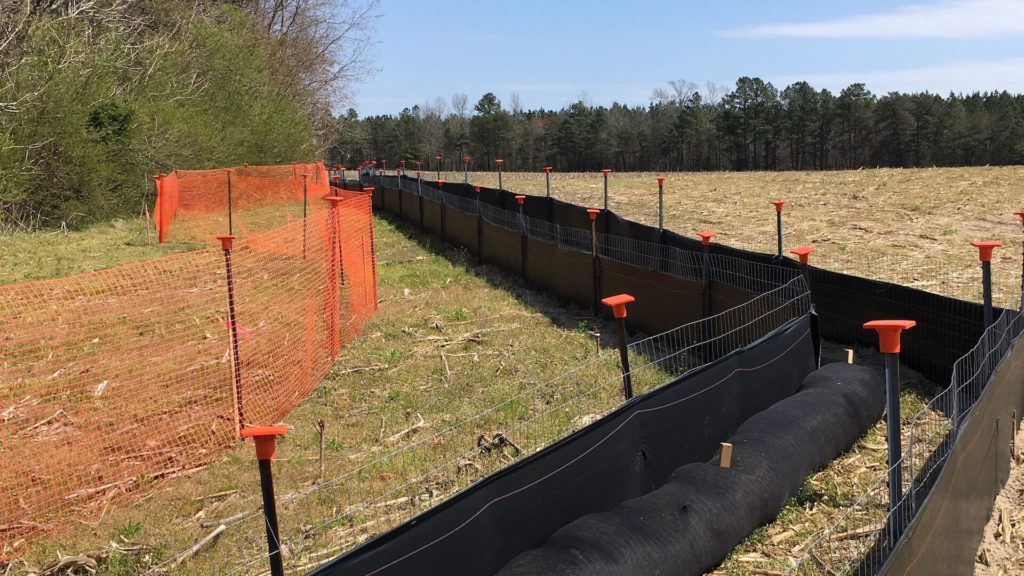
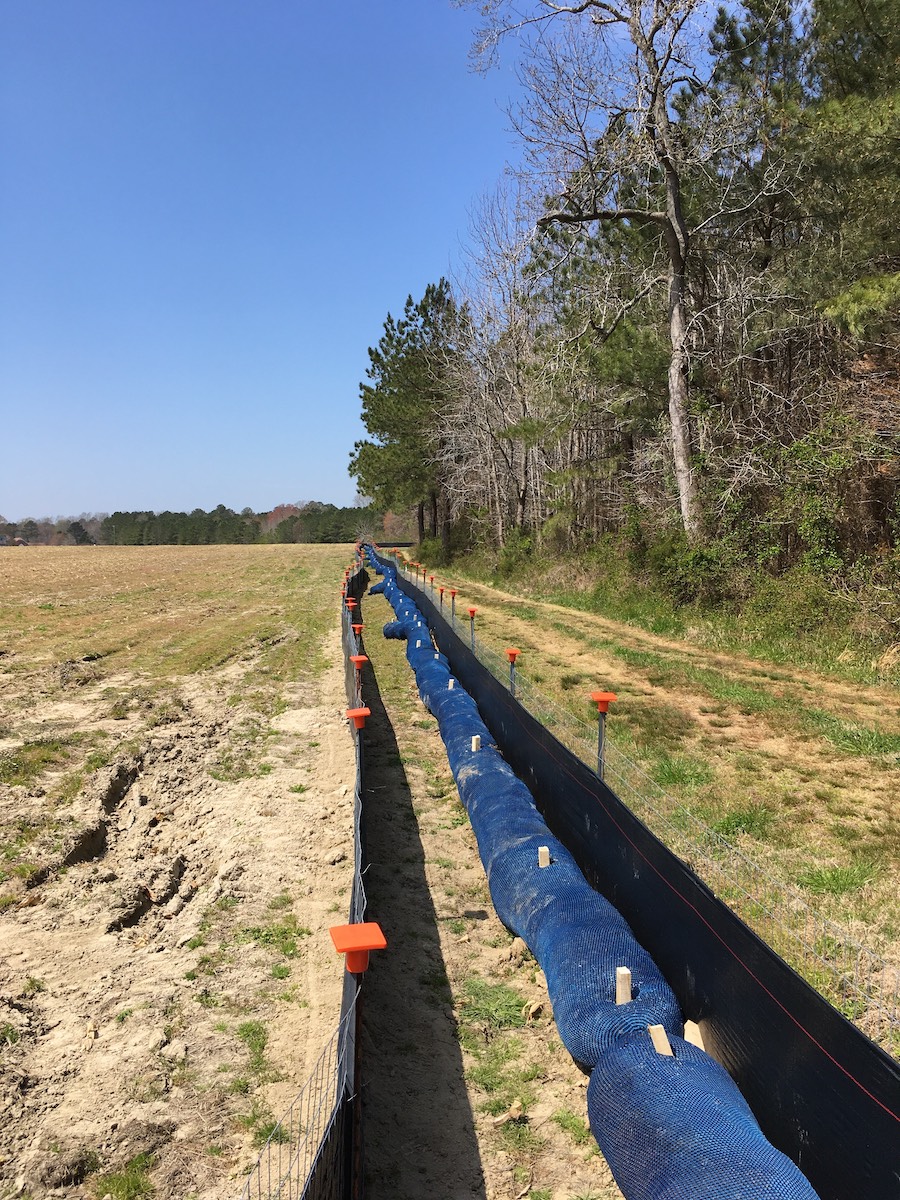
27,000 linear feet of Wire Reinforced Silt Fence and 5,000 linear feet of Compost Filter Sock
Geotextiles
8.0 oz nonwoven geotextile, biaxial geogrid and high strength woven geotextiles
Erosion Control
Turf reinforcement mats, single net straw matting and custom grass seed
Perimeter Control
Wire-reinforced silt fence, temporary barrier fence and compost filter sock
About the Project
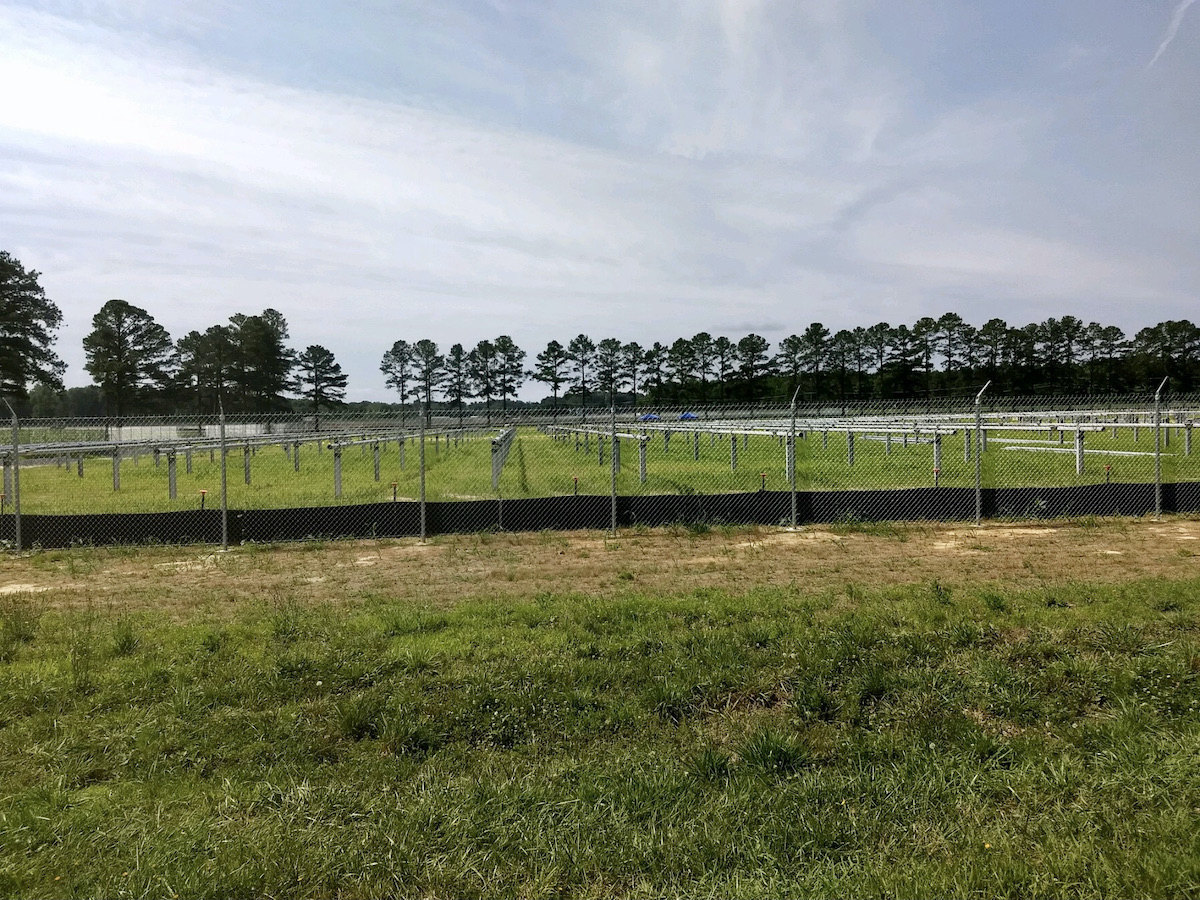
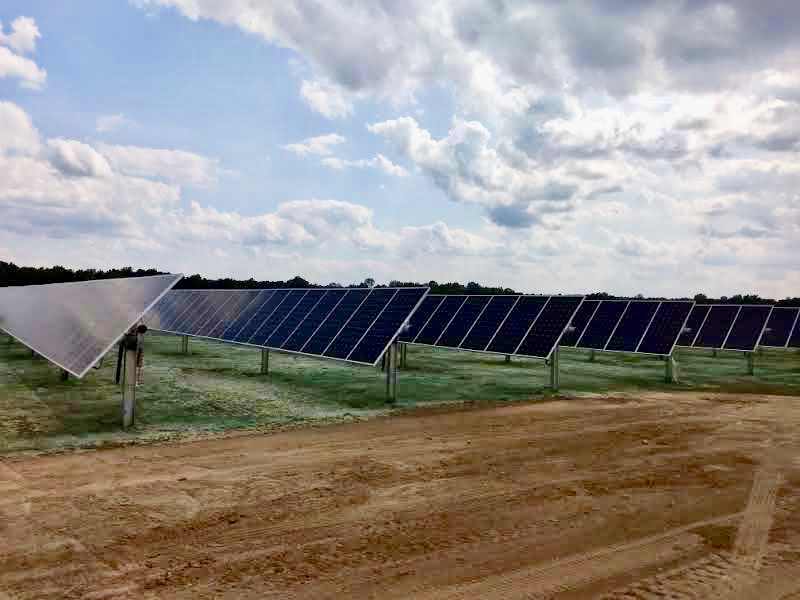
The Puller Solar farm is in Middlesex County, Virginia, approximately 60 miles east of Richmond, Virginia. This 15-megawatt solar farm includes 58,800 solar panels which can power about 3,750 homes at peak output. Coronal Energy developed Puller Solar and Dominion Energy constructed and owns the power plant. In 2017, the University of Virginia entered into a 25-year agreement to purchase the Virginia solar farm’s entire output. The Puller Solar Facility became operational in October 2018. Utter Construction performed the civil earthwork as a subcontractor for Amec Foster Wheeler Kamtech (now owned by Wood Group USA).
Silt Fence Reinforced with Erosion Control Wattle
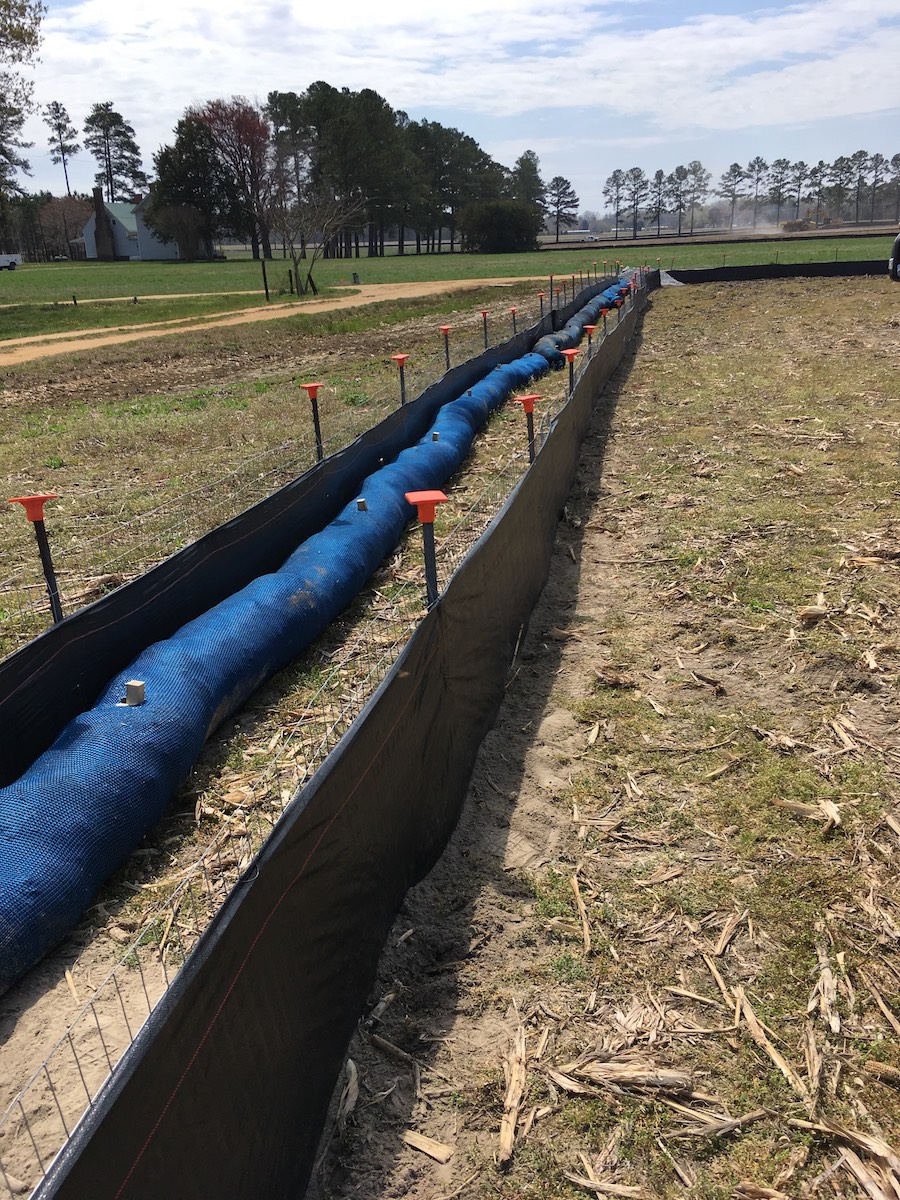
Approximately 5,000 linear feet of the Puller Solar Farm’s perimeter was specified for wire backed silt fence reinforced with a straw bale barrier.
Straw bale barriers can be an effective erosion control method for certain applications. As the Virginia Sediment Erosion Control Handbook states in Section 3.04, a straw bale barrier should be used to:
1. To intercept and detain small amounts of sediment from disturbed areas of limited extent in order to prevent sediment from leaving the construction site.
2. Decrease the velocity of sheet flows.
Although straw bales can be a good sediment control product, we didn’t believe it was the best product for Puller Solar Farm’s reinforced silt fence perimeter. Renewable energy construction projects require subcontractors to follow tight product schedules and pay close attention to erosion control maintenance. Straw bales are cumbersome to unload, tough to install and difficult to maintain.
We recommended that the subcontractor instead reinforce the wire-backed silt fence with MKB’s 18” Diamond Sock.
Just like straw bales, compost filter sock intercepts sediment from runoff and decreases the velocity of sheet flow. Although silt sock is much heavier than a straw bale, machine installation of the 55-foot continuous pallets was quick and easy. Colonial Construction Materials and Utter Construction’s installation crews quickly installed over 5,000 linear feet of the erosion control wattle. Once in place, the silt sock did not require routine maintenance and it effectively reinforced the silt fence in the highly sensitive areas.
Custom Grass Seed Mixtures
We worked with both Amec Foster Wheeler and Utter Construction to develop a custom grass seed mixture that would thrive on this Virginia solar farm. The mixture needed to germinate quickly and stabilize large areas of bare soil. The solar farm mixture also needed to grow low for easy maintenance around the solar panels but be traffic tolerant as subcontractors regularly accessed the site.
Seeding a solar site in coastal Virginia can be tricky because this region is in the agronomic Transition Zone. Typically, a combination of cool-season and warm-season varieties perform well in the Transition Zone.
After testing and consultation, we developed a grass seed mixture that incorporated Sahara Bermuda and Turf Type Tall Fescue as the two primary varieties. These two perennial crops balanced each other because Sahara Bermuda is a warm season grass that thrives in warm coastal climates. Sahara Bermuda is a low growing, drought resistant turf that can survive in sandy soil. Turf Type Tall Fescue is a cool-season variety that germinates quickly and can withstand heavy traffic.
We also added Clover and Weeping Love to the mixture, two varieties that are often used for erosion control in the Mid-Atlantic Transition Zone. Weeping Love is a fine seed that grows low but aggressively, two key benefits for solar farm seeding. Clover was also used because it has a strong root structure and nitrogen fixating capabilities. In addition to the Bermuda, Tall Fescue, Clover and Weeping Love, we incorporated Rye Grass in the cool months and Millet in the warm months. We chose to seasonally rotate in these nurse crops at low rates for the perennials to have time to establish and thrive.
Renewable Energy Experience
Related Projects
18 MW iN Virginia beach, VA
Oceana Solar
Community solar in MD
Brandywine Solar
80 MW in Altavista, va
Altavista Solar
Let’s Get to Work
Contact our team to get started with a quote.