Retaining Wall Construction
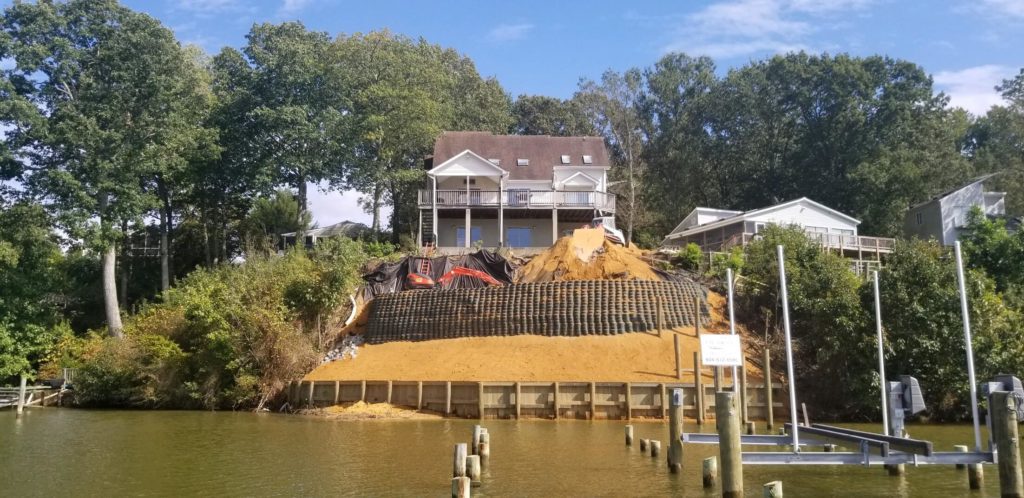
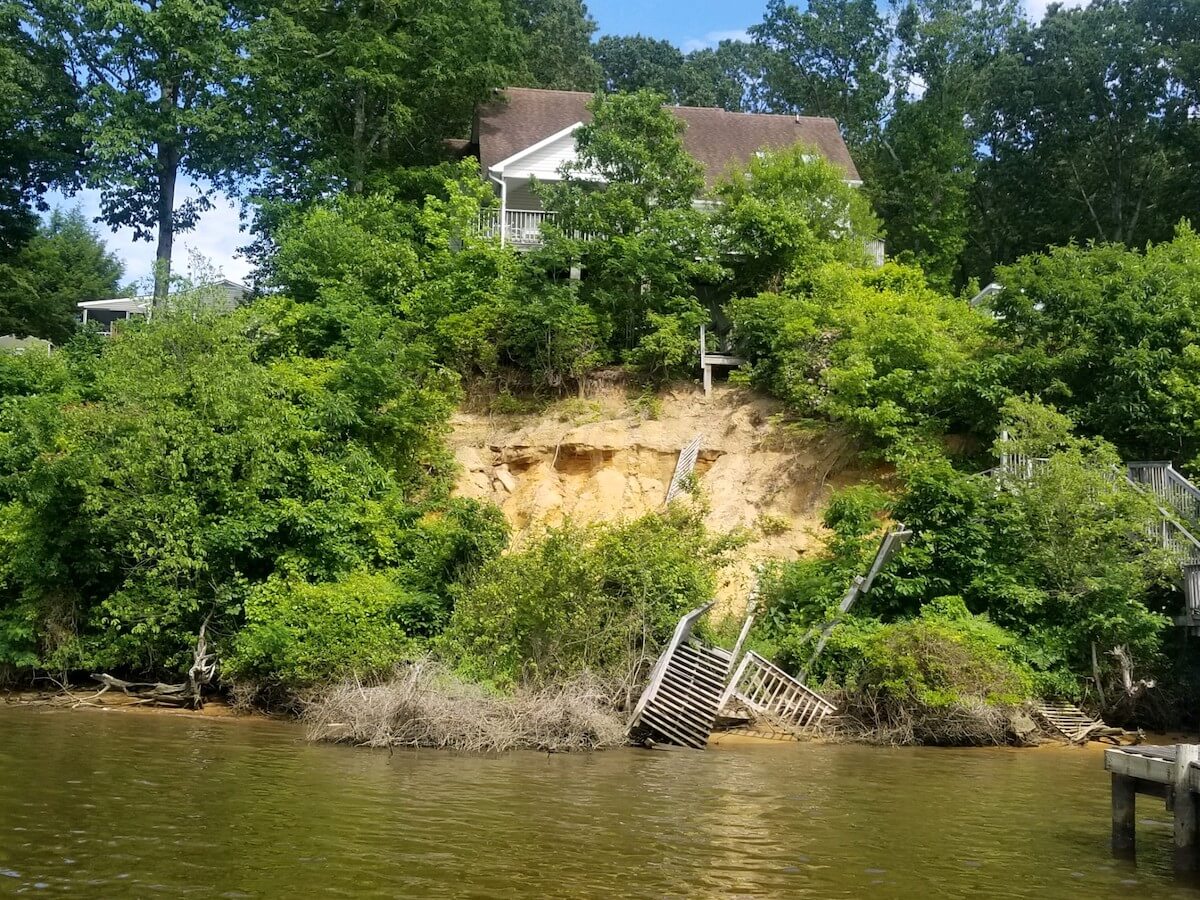
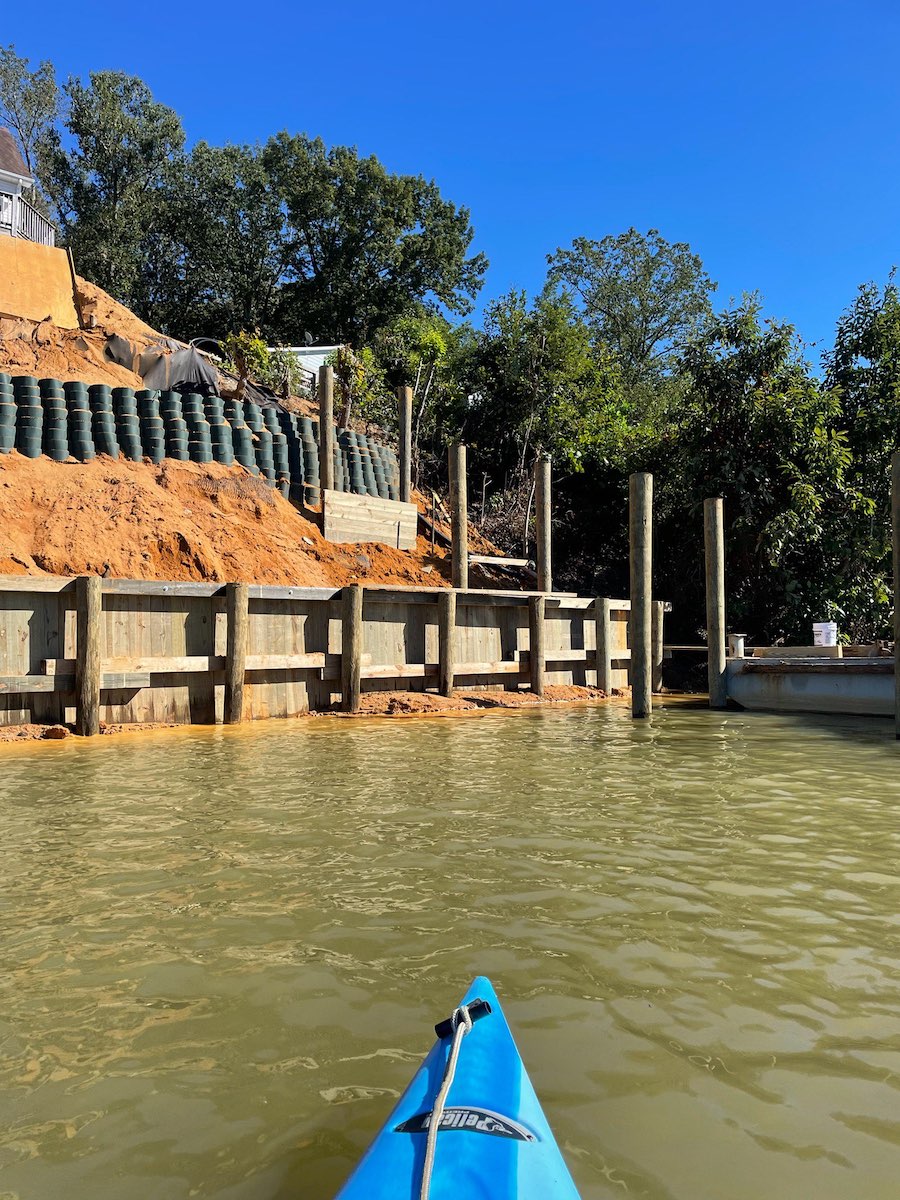
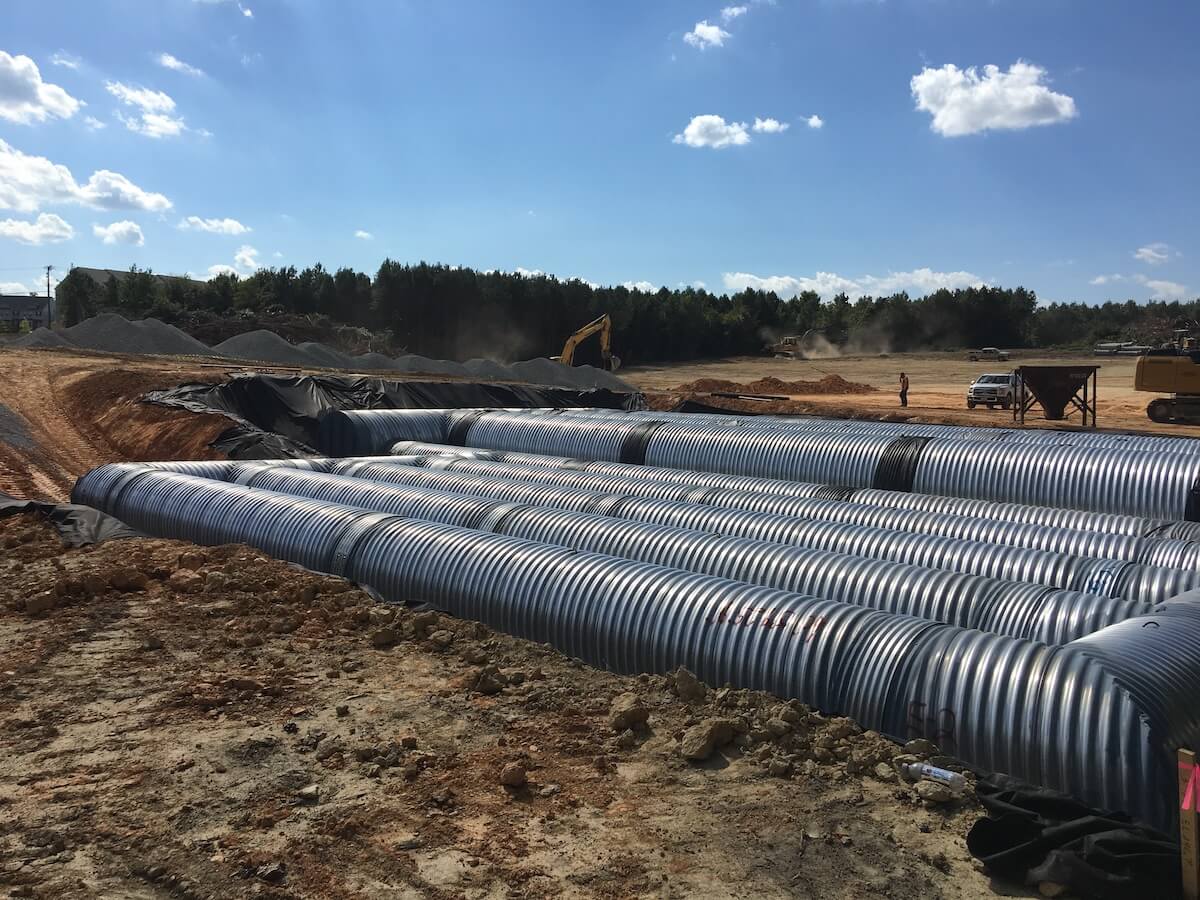
After the existing debris and structures were removed, the slope was graded and prepped for installation. After grading, a six-ounce nonwoven geotextile fabric was installed. The nonwoven geotextile fabric retains the soil while creating a separation and drainage layer between the existing soil and the backfill. HDPE Pipe was installed to improve drainage in the wall system.
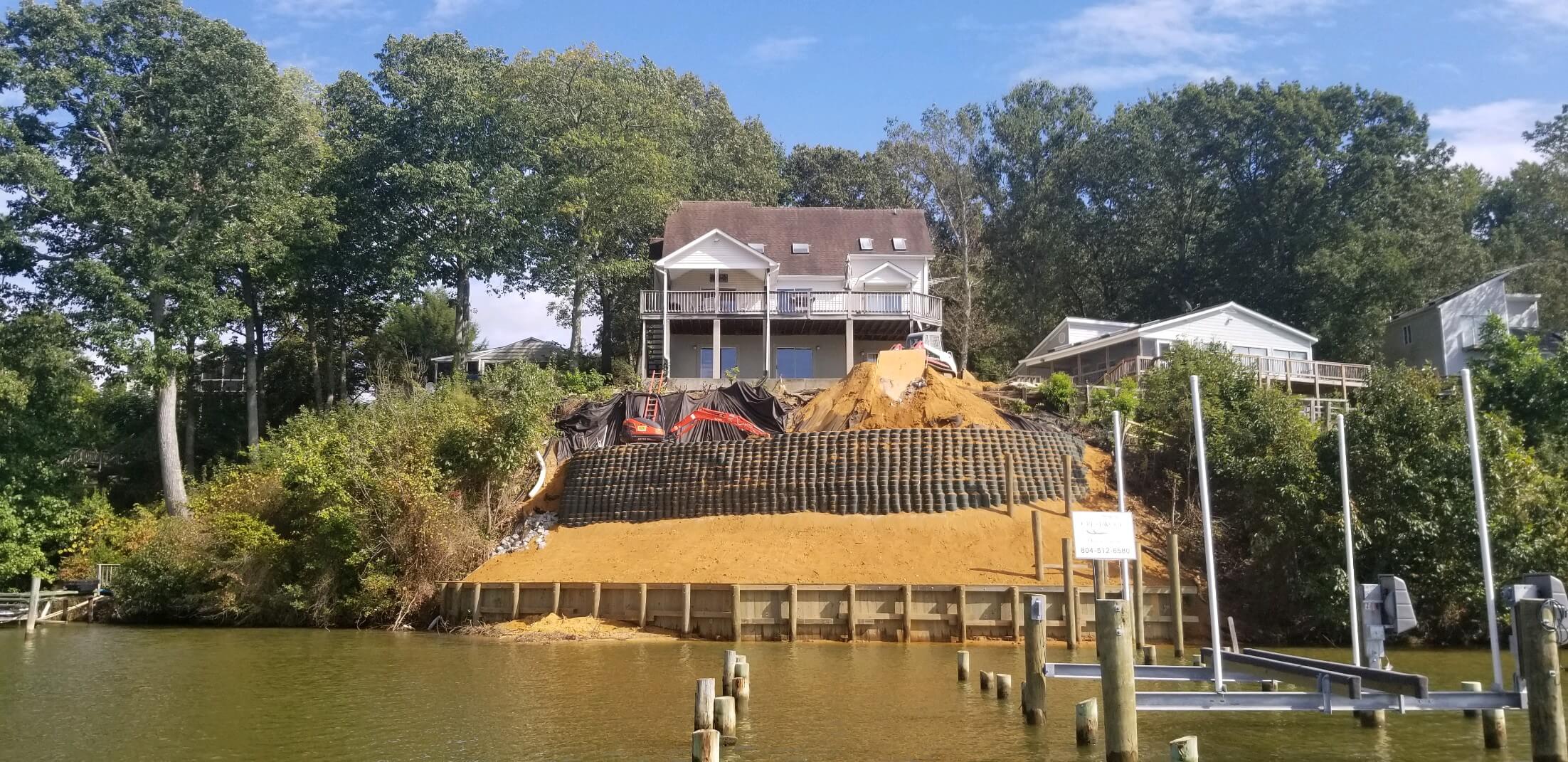
The retaining wall was built with lifts of uniaxial geogrid, 6-inch GW30V geocell panels and backfill. Two types of uniaxial geogrid were used for tieback structural support. This project required two different uniaxial geogrids, ERS-3 and ERS-5, because of the size of the wall which is 37-feet tall and 50-feet wide.
The backfill was compacted on each layer and a small setback was made before starting the next lift. The GEOWEB® geocell panels were secured with ATRA® Keys. The cells were filled with soil that was recycled from nearby construction sites. The type of backfill for geocell systems varies by project but generally it should be freely draining and compactable. The recycled fill met those requirements and was a good source of organic matter which helps the green wall vegetation to thrive.
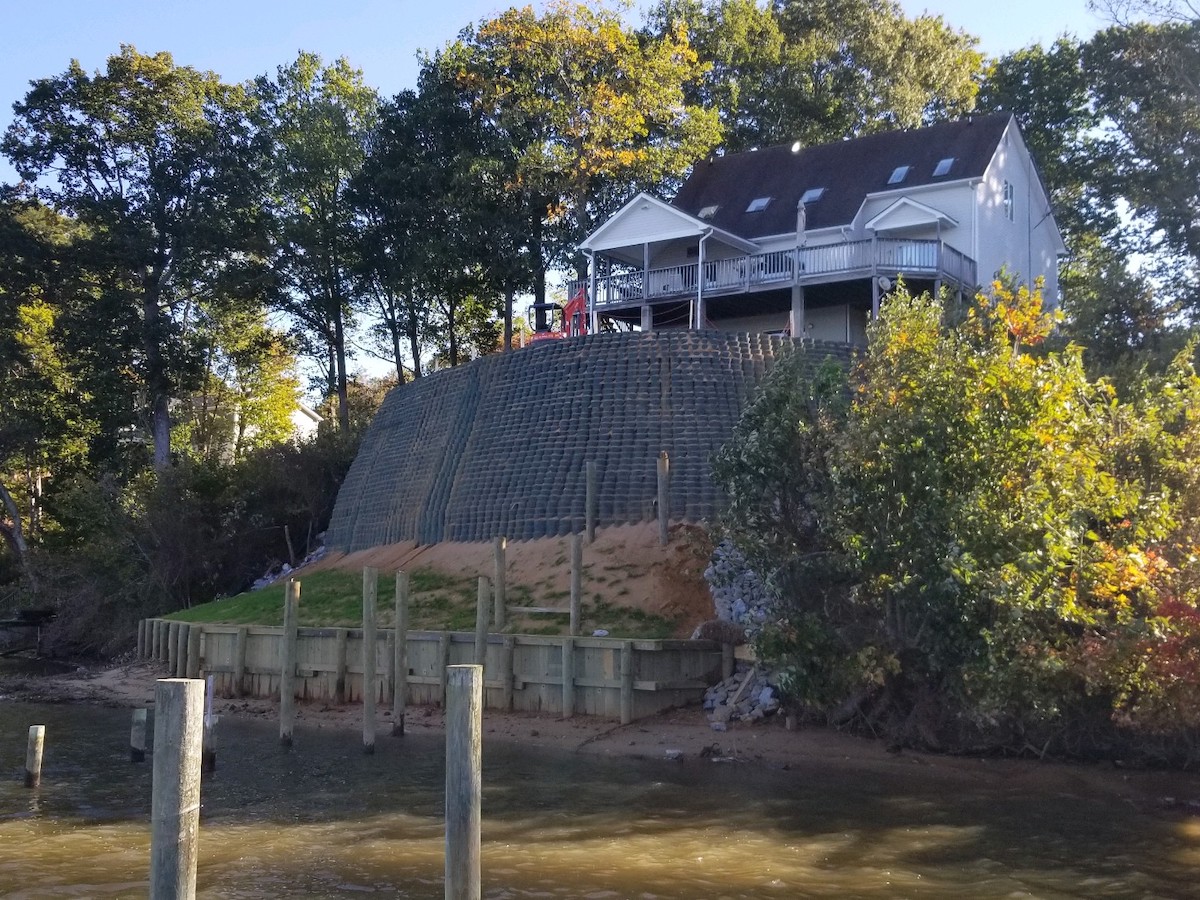
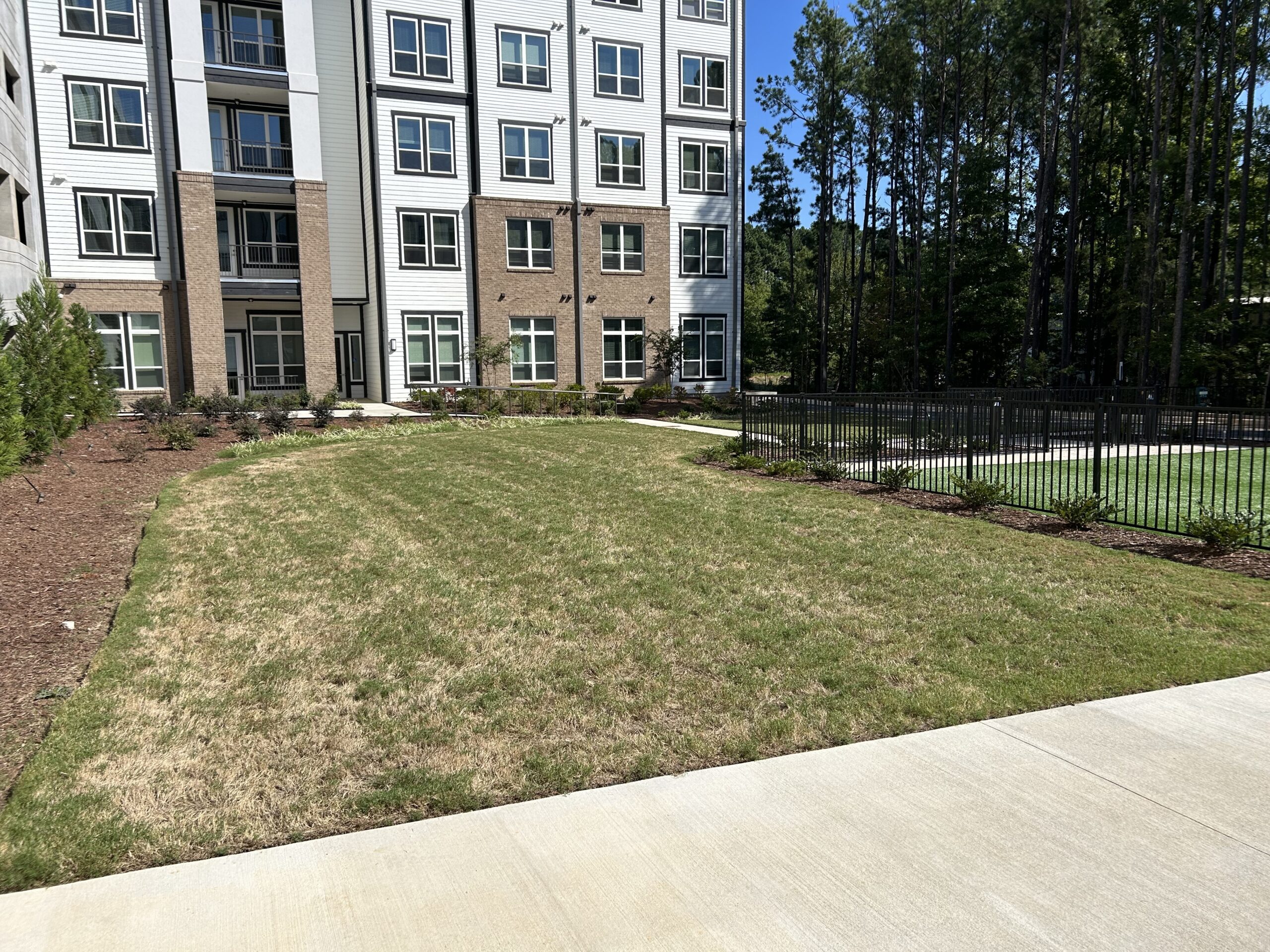
Construction completed in the of Fall 2021. The slope was seeded with Fall Contractor’s Mix Grass Seed which contained a blend of Fescue, Annual Rye and Winter Rye. This first seeding established vegetation before the Winter. In the Spring of 2022, the slope was seeded with Pennington Slope Master. Monkey Grass was added for aesthetics and perennial growth.
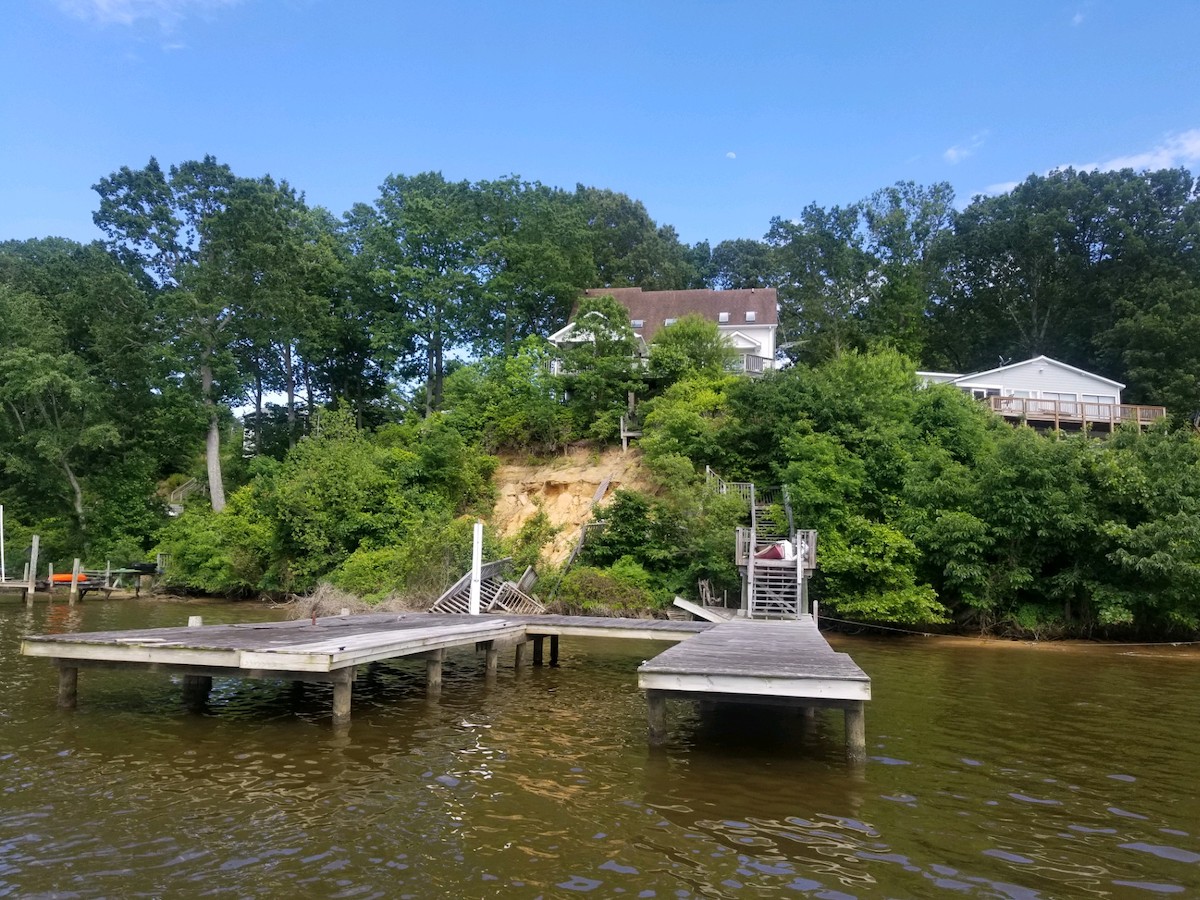
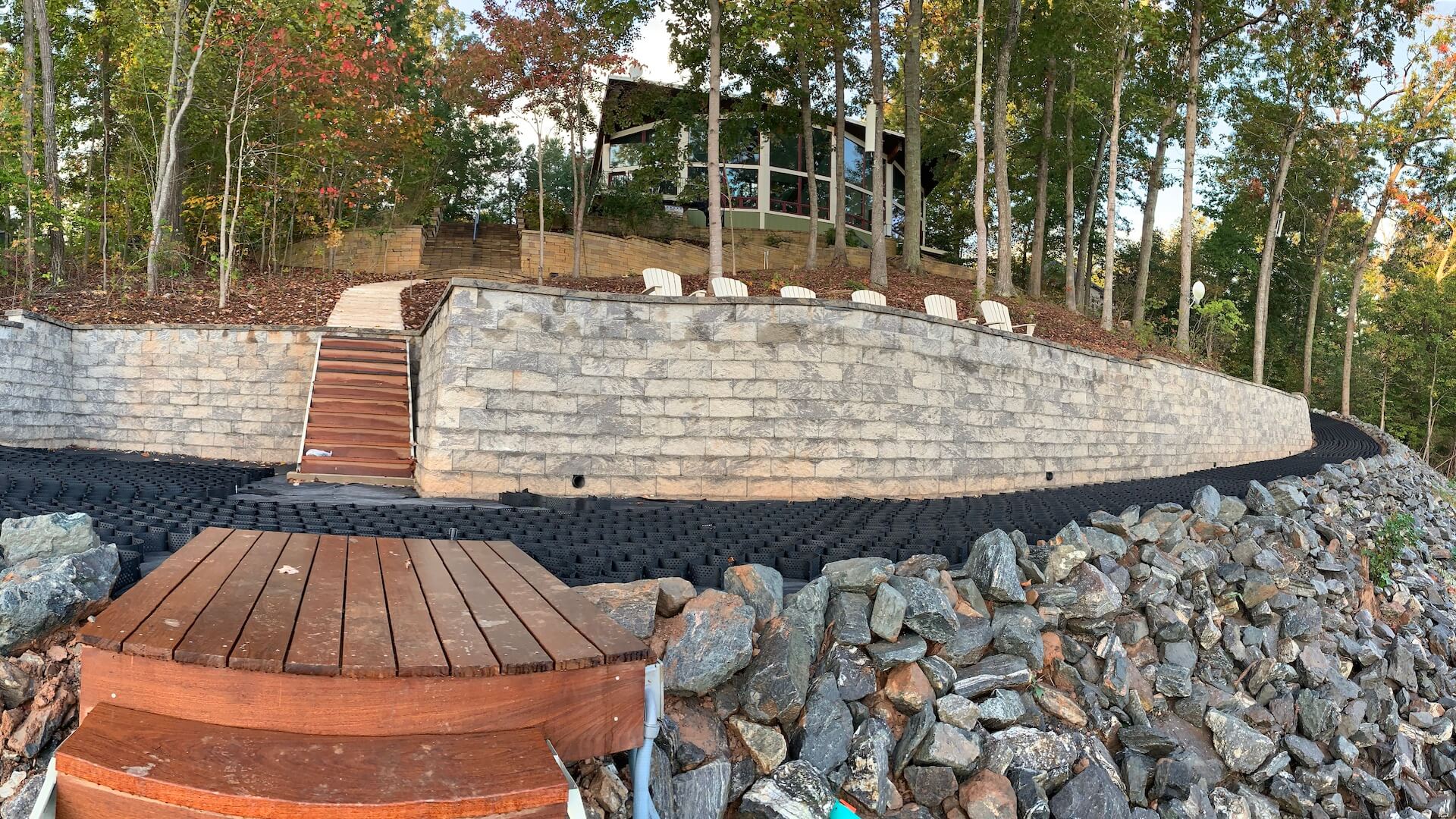
The GEOWEB® geocell retaining wall met the homeowners’ desire for a green solution that has structural support. Now they have regained their once eroded yard, restored the the natural aesthetics of the riverside and can once again use their dock.